The term “The New Evangelization” is thrown around in many Catholics circles today, but what exactly does it mean?
 It is believed that Blessed John Paul II first used the term in 1983 in an address to Latin American Bishops. He would later bring this term to the attention of the entire Church. Perhaps, the most clear definition of the New Evangelization is in his encyclical, Redemptoris Missio. In section 33 of this encyclical, Blessed John Paul II describes three different situations for evangelization: mission ad gentes, Christian communities, and the new evangelization.
Mission ad gentes: Latin for “to the nations.” This is a situation where “Christ and his Gospel are not known.”
Christian communities: “In these communities the Church carries out her activity and pastoral care.” This is the ongoing evangelization of those “fervent in the faith.”
New Evangelization: So, what is the new evangelization? Blessed John Paul II describes a situation between the first two options “where entire groups of the baptized have lost a living sense of the faith, or even no longer consider themselves members of the Church, and live a life far removed from Christ and his Gospel. In this case what is needed is a ‘new evangelization’ or a ‘re-evangelization.’”
The new evangelization pertains to a very specific group of people: fallen-away Christians. For most Catholics in the western world, we see the need for this type of evangelization all around us. Everyone knows someone who was once baptized but who no longer practices the faith. Blessed John Paul II wanted the faithful to clearly recognize this problem and then try to solve it.
FOCUS (The Fellowship of Catholic University Students) aims to answer the John Paul II’s call for the new evangelization. On college campuses across the nation, college students are falling away from their faith. Statistics show that just 15% of Catholics aged 18-25 attend Church on a weekly basis. FOCUS lives out the new evangelization on the college campus because of this critical age demographic.
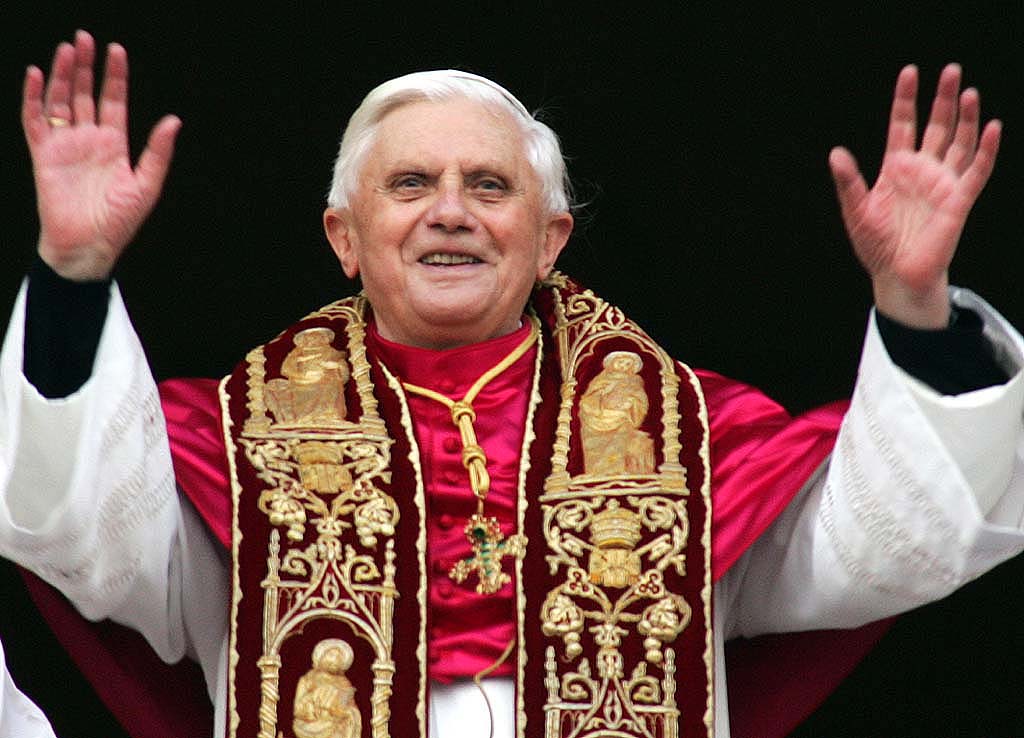
 Pope Benedict has continued the mission of the new evangelization in his pontificate. In 2010, Pope Benedict established The Pontifical Council for the New Evangelization. In 2012, he declared a Bishops’ Synod to discuss the New Evangelization. We should be hearing much more about this topic in the years to come. Below are some key quotes on the New Evangelization by Blessed John Paul II and Pope Benedict. For more, check out the full documents of the resources quoted below.
"I sense that the moment has come to commit all of the Church's energies to a new evangelization and to the mission. No believer in Christ, no institution of the Church can avoid this supreme duty: to proclaim Christ to all peoples" (Bl. John Paul II, Redemptoris Missio, no. 3).
"To this end, it is more necessary than ever for all the faithful to move from a faith of habit, sustained perhaps by social context alone, to a faith which is conscious and personally lived. The renewal of faith will always be the best way to lead others to the Truth that is Christ" (Bl. John Paul II, Ecclesia in America, no. 73).
"Look to the future with commitment to a New Evangelization, one that is new in its ardor, new in its methods, and new in its expression" (Bl. John Paul II, Address to the Latin American Bishops).
"The new evangelization in which the whole continent is engaged means that faith cannot be taken for granted, but must be explicitly proposed in all its breadth and richness" (Bl. John Paul II, Ecclesia in America, no. 69).
"Our own time, then, must be increasingly marked by new hearing of God’s word and a new evangelization. Recovering the centrality of the divine word in the Christian life leads us to appreciate anew the deepest meaning of the forceful appeal of Pope John Paul II: to pursue the mission ad gentes and vigorously to embark upon the new evangelization, especially in those nations where the Gospel has been forgotten or meets with indifference as a result of widespread secularism" (Pope Benedict XVI, Dei Verbum, no. 122).

 Each year, Pope Benedict gathers his former students together with him for a summer retreat that analyzes a specific topic. This year the topic was the New Evangelization as the Pope prepares for the Bishop's Synod on the New Evangelization in 2012. And along with this topic, the Pope made an interesting apology.